|
Dec. 18 - Jan. 15, 2012 |
Delicious layers of taste
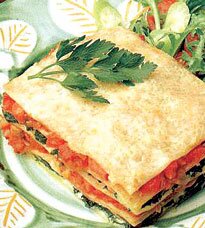
Lasagna is one of the classic favourites of Italian cuisine
By Rita Simonetta
Originally Published: 2004-03-14
Lasagna. This classic Italian dish, which at its most basis refers to flat sheets of pasta layered with meat, sauce and cheese, got its start as a chamber pot. Well, in a sense. The word comes from the Greek "lasana," which means "chamberpot." The Romans then transformed the word into "lasanum" which means "cooking pot." Soon the word then got transformed again into lágana. Apicio, Roman writer of the 1st century a.C. describes lágana in his book De re coquinaria.
Today, lasagna is a dish that every culture and every tastebud has taken as their own. The result is everything from Mexican-style lasagne to vegetarian and seafood lasagne. And to understand the history of lasagna you have to travel through the murky and complicated world of pasta.
No one is absolutely certain where and when pasta came to be. But there are certainly a slew of theories. There are some highlights throughout history. Etruscan archaeological findings, (found mainly in near present-day Rome) display stucco relieves of several tools used for home pasta-making.
The first certain record of noodles cooked by boiling is in the Jerusalem Talmud, written in Aramaic in the 5th century AD.
Naples became Italy's pasta centre in the 1500s. The King of Naples, Ferdinand II hired an engineer who devised a system where a machine took over the job of kneading and cutting.
It's considered common knowledge that lasagna is an Italian invention and probably got its start during the Ancient Roman era.
That claim went undisputed for centuries until last year, when the BBC reported news that stunned the culinary world: lasagna is British.
Researchers studying a medieval cookbook suggested the Brits were making the layered dish before it became a staple in Italy. Chefs everywhere stopped what they were doing - could the masterminds behind Yorkshire pudding have also had a hand in lasagna?
But staunch supporters on the Italian-lasagna front suggest the recipe found in the medieval cookbook doesn't mention meat - an essential ingredient in the layered pasta dish. They also point out that medieval cooks would never have used tomatoes - were considered to be poisonous during this period.
Page 1/...Page 2
|
Comments
CorriereTandem.com editors reserve the right to edit, review and allow or reject, in their entirety, website comments. Those comments that are posted are not the opinions of Corriere Canadese/Tandem, or Multimedia Nova Corporation nor its affiliates but only of the writer. Spelling and grammar errors will not be corrected. We will not allow comments that include personal attacks on citizens at large; comments that make false or unsubstantiated allegations; comments that claim to quote people or reports where the quote or fact is not publicly known; or comments that include vulgar language or libelous statements.
|
| Home / Back to Top |
|
|
 |
|
|




























 Share
Share