|
Feb 26,2006 - Mar 5,2006 |
Seasoning, Italian style
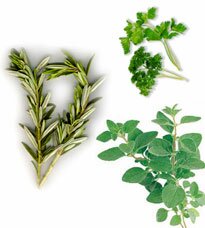
Oregano, parsley, and rosemary add pizzazz to dishes
By Rita Simonetta
Originally Published: 2003-10-12
An Italian dish just isn't the same without the herbs that add unmistakable flavour and pizzazz.
Oregano is one of the most popular of all the Italian herbs. Derived from the Greek word that means "joy of the mountains," oregano is similar to marjoram, but has a more pungent flavour than its counterpart.
When buying Italian oregano, choose bright-green bunches. Store in a cool, dark place, and use within six months. Oregano is commonly used in appetizer dishes, such as bruschetta, pizza, and many tomato-based dishes.
Petroselinum crispum is the Latin name for the herb known more commonly as parsley. A member of the carrot family, it's regarded as one of the most nutritious of all herbs. A cup of parsley contains more beta carotene than a carrot, about twice the amount of Vitamin C as an orange, and more calcium than a cup of milk.
There are two main types of parsley: the curly variety often used as a garnish, while the flat-leaved version is often used to season dishes. The herb is thought to have Italian roots and culinary historians have suggested that this flavour-enhancer originated in Sardinia.
Prezzemelo is often sprinkled on appetizers, such as soups and salads, or over meat and fish dishes. It's often combined with garlic to season sauces. It's essential to the breaded clams recipe known as Vongole Ripiene, the traditional Tuscan soup, Ribollita, and Panzanella, a salad made from fresh tomatoes, cucumbers, onions and bread.
Add it during the last few moments of cooking for the freshest flavour. Cooking it for a long time takes away from its high level of Vitamin C.
Beyond its ability to add some pizzazz to a wide range of dishes, parsley is one of Mother Nature's medicinal aids. For centuries it's been used as a blood purifier, as a mild sedative, an aid in indigestion, and to treat stomachaches. Parsley leaves are a natural breath freshener and Ancient Romans often enjoyed it after large meals. Then there's parsley root, which is a diuretic and helps prevent kidney stones.
Page 1/...Page 2
|
| Home / Back to Top |
|
|
 |
|
|



























 </ td>