|
Mar 26,2006 - Apr 2,2006 |
16 - Italians were replacements for slaves
Turn-of-century immigrants to Australia were subject to racist attacks by residents
By Antonio Maglio
Originally Published: 2002-11-10
 |
|
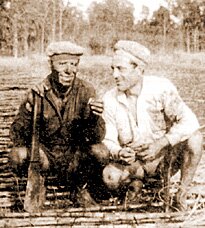
Italian sugar cane cutters in Queensland
|
Once upon a time, in Australia's Queensland, the sugar cane was harvested by Kakanas, Melanesian half-slaves. When forced to replace them, the colonial government recruited 335 peasants from the Veneto. That was in 1891. Thus began Italian emigration to Australia.
The job was awful. The cane could only be cut after burning the bush and driving away mice, scorpions and snakes; then the real machete work began. It went on from the early morning light for as long as the worker could stand, because the wages were based on piecework. Those who survived that hell were uncommon men. The Venetian peasants survived.
However, Australia was not unknown to Italians. A decade earlier, in fact, some fishermen from Molfetta, the Eolian Islands and Capo d'Orlando had already come looking for fortune. A few dozen people, but by the turn of the century they had vigorously contributed to modernizing and boosting the fishing industry in Fremantle, where they had settled down. Before them, only missionaries, political exiles and artists had reached the end of the world. People like father Salvado (who sported a musical name, Rudesindo), for instance, who wrote his Memorie storiche dell'Australia, particolarmente della Missione Benedettina di Nuova Norcia e dei costumi degli Australiani ("Historical memories of Australia, particularly of the Benedictine Mission of New Norcia and of the customs of Australians") upon his return to Italy in 1851. The title may be long, as was fashionable at the time, but the book has historic value. It was the first book on Australia ever published in Italy.
Raffaello Carboni, a follower of Garibaldi and Mazzini, who had to leave Italy after the fall of the Roman Republic (1849), arrived Down Under in 1854. He was less than fascinated by the political situation he found. "In fact, the British colonial rule was all but enlightened. It was fundamentally racist, and no less repressive than the Italian governments of the time," explains Gaetano Rando, historian of Italian emigration to Australia. "What particularly struck Carboni was the absence of the ideals of democracy, equality and liberty that were present in the European progressive movements."
Page 1/...Page 2
|
| Home / Back to Top |
|
|
 |
|
|



























 </ td>